Understanding Your Brake System Before You Turn a Wrench
Modern hydraulic brake systems are straightforward once you break them into components: the brake pedal pushes the master cylinder, which pressurizes brake fluid in lines and hoses, sending that pressure to calipers (or wheel cylinders on drum brakes). The calipers clamp pads against rotors, converting motion into heat and stopping the vehicle.
Before touching anything, do a visual and functional check. With the engine off, press the brake pedal repeatedly: it should firm up as vacuum assist is depleted. Then start the engine; the pedal should sink slightly as the brake booster engages. Note any pulling to one side under braking, pulsation in the pedal, grinding noises, or a soft/spongy pedal—these symptoms will guide where to focus your inspection.
Get familiar with the layout: locate the master cylinder and reservoir under the hood, follow hard lines to flexible rubber hoses at each wheel, and identify your front and rear braking type (four-wheel disc vs. disc/drum). Always consult your owner’s manual or a repair database for torque specs, fluid type, and any model-specific procedures before disassembly.
Professional Tip 1: Make a Systematic Pre-Repair Brake Inspection
Professional techs don’t start replacing parts; they start with a pattern. You should, too. Begin with a “no tools” inspection:
- Check the brake fluid level and color. Fluid should be between MIN and MAX and appear clear to light amber. Dark, brown, or nearly black fluid suggests moisture contamination and age.
- Inspect around the master cylinder and booster for damp areas or peeling paint (brake fluid can strip paint).
- Look at each wheel for signs of leakage—wet spots on the inner side of wheels, backing plates, or calipers.
- Note rotor condition through the wheel spokes if possible: heavy rust ridges, deep grooves, and blue or purple spots indicate overheating or wear.
Then move to a “wheels-off” inspection on a level surface, using jack stands under proper lift points:
- Check pad thickness. Most manufacturers recommend replacement around 3 mm (about 1/8"); if you’re close, plan a replacement rather than pushing it.
- Inspect rotors for scoring, cracks, or severe rust. Light surface rust from sitting is normal; heavy pitting and flaking are not.
- Flex rubber hoses gently by hand to check for surface cracks, bubbles, or stiffness.
- On drum brakes, pull the drum (if serviceable) and inspect shoes, springs, and wheel cylinders for leaks or broken hardware.
Document what you see—photos help you verify reassembly later and compare wear the next time you inspect.
Professional Tip 2: Do Caliper and Pad Service the Right Way
Slapping in new pads without addressing caliper movement is one of the biggest DIY mistakes. Proper brake service is as much about free movement as it is about new friction material.
When servicing disc brakes:
- Clean the caliper bracket thoroughly. Use a wire brush to remove rust and debris from pad mounting areas before installing new hardware clips.
- Always replace pad hardware (spring clips, abutment clips) if your kit includes them. They’re cheap and critical for proper pad fit and noise control.
- Remove and inspect caliper slide pins. Clean them, then apply a high-temperature synthetic brake grease designed for slides (not general-purpose grease). If a pin is seized or heavily corroded, replace it.
- Use a proper piston compression tool or C-clamp with an old pad to push pistons back slowly and evenly. Open the master cylinder cap to relieve pressure, but keep it covered with a clean rag to avoid contamination.
- On multi-piston or rear calipers with integrated parking brakes, confirm whether the piston must be rotated in (screw-type) instead of pushed. For these, use a brake piston rewind tool; forcing them in can damage the mechanism.
Once pads and calipers are installed, verify that pads slide freely in their channels and that the caliper moves smoothly on its pins. If anything binds during dry fitting, fix it before you torque bolts and move on.
Professional Tip 3: Treat Brake Fluid and Bleeding Like a Safety-Critical Job
Brake fluid is hygroscopic—it absorbs moisture over time. That moisture lowers the boiling point of the fluid and can corrode internal components. Professional shops often see severely degraded fluid on vehicles older than three to four years that have never had a flush.
For DIY service:
- Use the correct fluid type only (typically DOT 3, DOT 4, or DOT 5.1 for most passenger vehicles; never mix with silicone-based DOT 5 unless specifically required by the manufacturer).
- Never reuse fluid you’ve bled out. Once it’s exposed to air and contaminants, it’s waste.
- Keep containers sealed. Brake fluid starts absorbing moisture as soon as you open the bottle; avoid using very old, previously opened containers.
When bleeding brakes:
- Start with the corner farthest from the master cylinder (commonly right rear), then move progressively closer (left rear, right front, left front), unless your service manual specifies a different sequence.
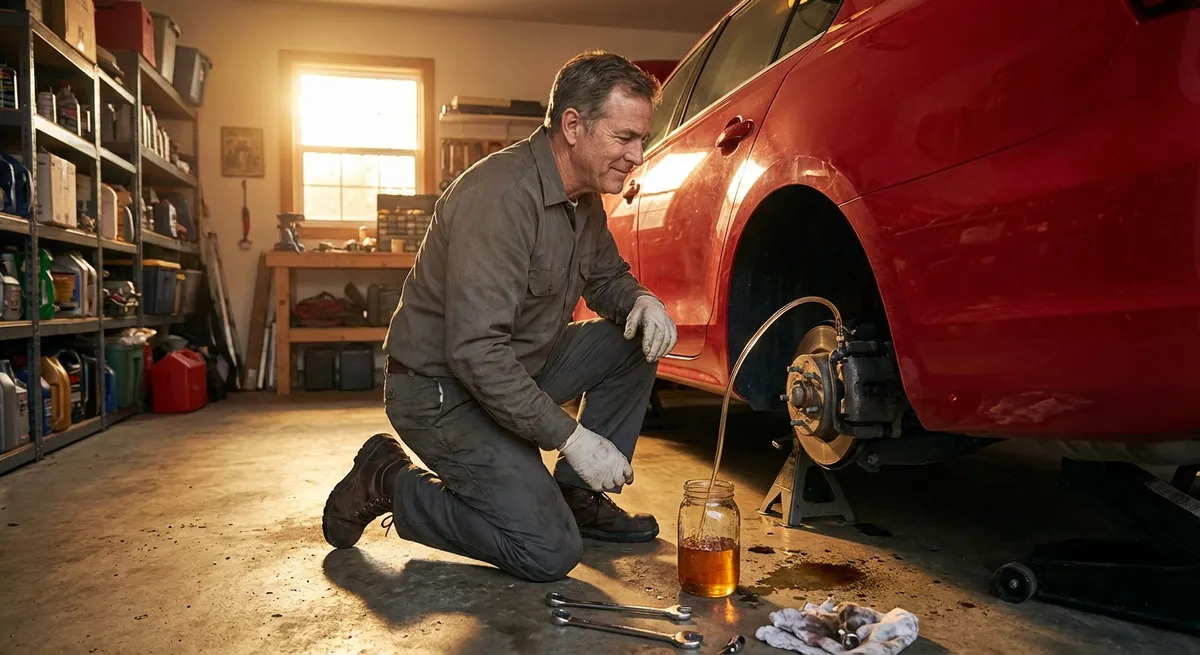
- Use clear vinyl tubing on the bleeder screws, routing it into a catch bottle so you can see air bubbles.
- Have a helper pump the pedal slowly and hold pressure while you crack the bleeder, then close the bleeder before your helper releases the pedal. Repeat until you see clear, bubble-free fluid.
- Keep the master cylinder from running low—top it up frequently to avoid introducing air into the system.
If you’re working solo, a one-person vacuum or pressure bleeder can make the job more controlled and consistent, and reduces the risk of aerating the fluid.
Professional Tip 4: Clean, Prep, and Torque Like a Pro
Brakes are as much about precision assembly as they are about parts. Sloppy reassembly leads to noise, vibration, uneven wear, and comebacks—whether in a shop or your driveway.
Adopt these pro habits:
- Clean rotor and pad surfaces before installation. New rotors often come coated in oil or rust inhibitor; remove with brake cleaner and a clean, lint-free towel.
- Use a wire brush to clean hub faces thoroughly before installing rotors. Any rust scale or debris can cause rotor runout, leading to pedal pulsation and uneven wear.
- Apply high-temperature brake grease sparingly to pad backing plates and contact points (where the pad contacts the caliper bracket clips), not to the friction surface.
- Always torque caliper bracket bolts, caliper slide bolts, and wheel lug nuts to factory specs using a torque wrench. Over- or under-tightening can cause noise, warped rotors, or component damage.
- Tighten wheel lugs in a star pattern on 5-lug wheels (or appropriate crisscross pattern for other counts) to ensure even clamping of the rotor and wheel.
When you’re finished, pump the brake pedal slowly several times before moving the vehicle. This seats the pads against the rotors and restores a firm pedal after piston compression.
Professional Tip 5: Finish with Proper Bedding-In and Ongoing Checks
Even the best brake job won’t perform its best without proper bedding-in. Bedding transfers an even layer of pad material onto the rotor surface, stabilizes friction characteristics, and helps prevent issues like judder and squeal.
A general bedding procedure (confirm with pad manufacturer if provided):
- Find a safe, traffic-free area.
- Perform a series of medium stops from about 30–40 mph down to 5–10 mph, using moderate pedal pressure. Do not come to a complete stop and do not lock the wheels or trigger ABS.
- Allow some driving time between stops to let brakes cool slightly; avoid riding the brakes.
- Follow with a few slightly harder stops, then drive normally for 10–15 minutes to cool components.
Once bedded, pay attention over the first few days:
- Listen for persistent grinding or metallic scraping (beyond light, temporary noises from new pads).
- Monitor for pulling, vibration, or a brake warning light.
- Recheck fluid level after your first test drive and again after a few days.
Finally, fold brake checks into your regular routine: quick visual checks whenever you rotate tires and a more thorough inspection annually or as recommended in your owner’s manual. This preventative approach keeps “oh no” moments on the road to a minimum and extends the life of every component you’ve just invested in.
Conclusion
Taking control of your brake maintenance isn’t just about saving money—it’s about owning one of the most important safety systems on your vehicle. By inspecting systematically, servicing calipers correctly, treating brake fluid with respect, assembling with clean, torqued precision, and bedding-in your pads properly, you bring shop-level discipline into your own garage. Start with one axle if you’re new, follow procedures carefully, and build your skills from there. With the right approach, every brake job becomes less intimidating and more routine—and your stopping power becomes something you can trust because you built it yourself.
Sources
- National Highway Traffic Safety Administration (NHTSA) – Brakes and Brake Systems - Overview of brake system safety considerations and component function
- U.S. Department of Transportation – Brake Fluid Information (FMVSS No. 116) - Official standards and technical details for motor vehicle brake fluids
- University of Nebraska–Lincoln – Brake System Fundamentals - Educational publication explaining hydraulic brake systems and basic service concepts
- Brembo – Brake Pad and Disc Bed-In Procedure - Manufacturer guidance on proper bedding-in of brake pads and rotors
- Bosch Auto Parts – Brake System Inspection and Maintenance - Practical tips and safety recommendations for brake inspection and service