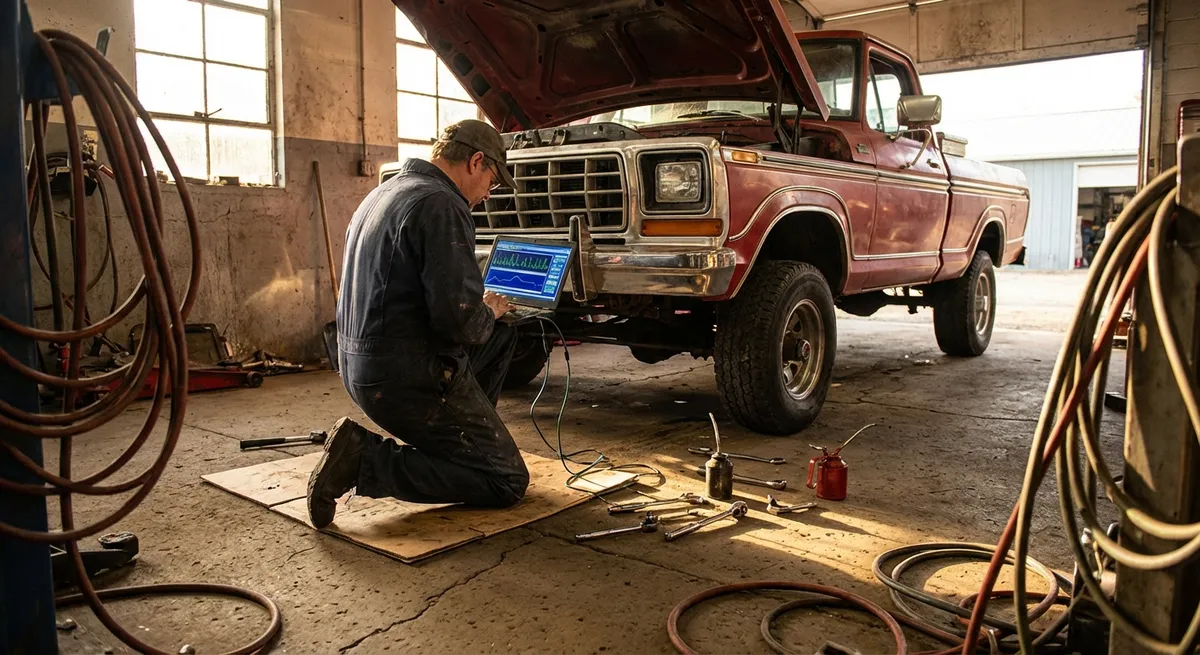
This guide breaks down how your engine works in real-world terms, then walks through professional-level repair and maintenance strategies you can actually use, whether you wrench yourself or just want to talk to your mechanic like a pro.
How Your Engine Really Fails (Not Just “It Blew Up”)
Every modern gasoline engine is a tightly controlled air pump. Fuel, air, and spark come together under massive pressure and heat—over and over, thousands of times per minute. That abuse wears on four key systems:
- Lubrication system – Oil reduces friction, carries away heat, and keeps internal parts from grinding themselves to dust. When oil breaks down, gets low, or is contaminated, bearings, camshafts, and piston rings suffer first.
- Cooling system – Coolant, water pump, radiator, thermostat, and hoses work together to keep temperatures in a safe window. Overheating warps cylinder heads, blows head gaskets, and can seize the engine.
- Air and fuel delivery – Air filter, intake, fuel pump, injectors, and fuel quality dictate how completely fuel burns. Poor combustion causes carbon buildup, misfires, and damage to valves and catalytic converters.
- Ignition and timing – Spark plugs, coils, timing chain/belt, and variable valve timing systems ensure combustion happens at the right moment. Incorrect timing can destroy pistons and valves in seconds on interference engines.
Engines rarely fail from “bad luck.” They fail from:
- Ignoring small leaks or noises
- Overheating even once
- Running low on or dirty oil
- Skipping belt/chain and fluid service intervals
Knowing this lets you focus your time and money on what actually prevents breakdowns.
Professional Tip #1: Treat Oil as a Wear Item, Not Just a Fluid
Most engines die from lubrication-related damage long before anything “wears out.” Oil isn’t just a lubricant—it’s also a cleaner and heat carrier, and it degrades with time, heat, and contamination.
How to manage engine oil like a pro:
- Use the exact spec your engine calls for.
Check the owner’s manual or OEM site for viscosity (e.g., 0W-20, 5W-30) and specification (e.g., Dexos, API, ACEA). Using the wrong spec can affect variable valve timing systems and turbochargers.
- *Follow a mileage and time interval.
If you drive infrequently or lots of short trips, you may need to change oil by time (e.g., every 6–12 months) even if you haven’t hit the mileage. Moisture and fuel dilution build up in oil that doesn’t get fully hot.
- Inspect oil level monthly—don’t rely on dash lights.
The low-oil-pressure light often means “damage is already happening,” not “time to add a quart.”
Check on level ground, engine off, after a few minutes of sitting. Top off if near the low mark.
- Monitor for consumption trends.
- Worn piston rings or valve seals
- PCV (positive crankcase ventilation) issues
- External leaks from seals or gaskets
- Don’t cheap out on filters.
All engines use some oil. Sudden increases in usage can indicate:
A quality oil filter with proper bypass valve and filtration rating is crucial. Poor filters can collapse internally or bypass too early, sending unfiltered oil through the engine.
When to see a shop:
If you notice metallic glitter in drained oil, a loud ticking/knocking noise at startup, oil pressure warnings, or the oil level dropping rapidly between checks, have a professional inspect bearing clearances, oil pump output, and internal wear before catastrophic failure.
Professional Tip #2: Overheating Once Is an Emergency, Not an Inconvenience
Engines tolerate minor oil neglect far better than they tolerate heat. A single severe overheat can warp aluminum cylinder heads, crack blocks, and compromise head gaskets.
Smart cooling system habits:
- Watch the temperature gauge actively.
Learn what “normal” looks like for your car. If it climbs higher than usual on hills, in traffic, or with A/C on, that’s early warning—even before the light comes on.
- Never remove a hot radiator cap.
You can suffer serious burns, and you can also instantly drop system pressure, causing localized boiling and potential damage. Wait until the engine is completely cool.
- Use the correct coolant type and mix.
Mixing universal coolant with manufacturer-specific coolants (HOAT, OAT, etc.) can reduce corrosion protection. Use what the manufacturer specifies, usually at a 50/50 mix unless otherwise stated.
- Inspect these components at least annually:
- Radiator and heater hoses (bulging, cracking, or soft spots)
- Radiator fins (bent, corroded, or packed with debris)
- Water pump (check for seepage or wobble at the pulley)
- Thermostat (symptoms: slow warm-up, overheating, or temp swings)
- Cooling fans (should engage with A/C on and at higher temps)
- If the engine overheats on the road:
- Turn off A/C, turn heater on full hot and full blower—this dumps heat from the engine.
- If temp keeps rising, safely pull over and shut the engine off.
- Call for a tow rather than “nursing it home”; saving the tow bill can cost you an engine.
When to see a shop:
Recurrent overheating, loss of heat from the cabin heater, unexplained coolant loss, or thick white exhaust smoke may indicate a failing head gasket or internal coolant leak—these require professional diagnosis (cooling system pressure test, block test, or leak-down test).
Professional Tip #3: Take Ignition and Timing Seriously—They Protect the Whole Engine
Poor ignition and incorrect timing don’t just cause rough running—they can damage pistons, valves, and catalytic converters. A misfire left unresolved can turn into a four-figure repair.
What to stay on top of:
- Replace spark plugs on time using OEM-equivalent parts.
If the manual says 60,000 or 100,000 miles, treat that as a hard limit. Bad plugs stress coils and increase misfires. Use the specified plug type (iridium, platinum, etc.).
- Address misfires immediately.
A flashing check engine light indicates an active misfire that can overheat and melt the catalytic converter. Reduce speed and load; have it scanned and repaired ASAP.
- Respect timing belt/chain intervals.
- Belts: Many engines recommend replacement between ~60,000–105,000 miles or by age (often 7–10 years).
- Chains: “Lifetime” is marketing. Listen for rattles at cold start and have chain guides and tensioners inspected if noise develops.
- Understand interference vs. non-interference engines.
On interference engines, a broken timing belt or chain can cause piston-to-valve contact, bending valves and sometimes cracking pistons. That typically means a full top-end rebuild or engine replacement.
- After any overheating or oil starvation event, have timing components inspected. Overheated or oil-starved tensioners and guides can fail later, even if they seem OK immediately afterward.
When to see a shop:
If you hear a rattling/chain-like noise at startup or idle, experience hard starting, or feel a loss of power accompanied by timing-related codes (like cam/crank correlation codes), have a professional verify mechanical timing before driving further.
Professional Tip #4: Fuel, Air, and Carbon Buildup—Clean Combustion Pays Dividends
Engines run best when air and fuel are cleanly delivered and fully burned. Modern fuel injection systems are precise, but they’re sensitive to deposits, poor fuel, and dirty air.
Practical steps to protect combustion:
- Use top-tier fuel when possible.
Top Tier–certified fuels contain enhanced detergents that help prevent carbon buildup on valves and injectors. You don’t always need premium octane—follow your manual—but detergent content matters.
- Replace the air filter as needed, not just by miles.
Inspect at every oil change if you drive in dusty conditions. A severely clogged filter forces the engine to work harder and can skew fuel trims.
- Don’t overuse fuel additives.
Quality fuel system cleaners can help, but stick to reputable brands and recommended intervals. Dumping random additives regularly can be a waste and occasionally harmful.
- Know the difference in carbon issues:
- Port-injected engines: Fuel washes over intake valves, helping keep them cleaner.
- Direct-injected engines: Fuel sprays directly into the cylinder, allowing intake valves to accumulate carbon. These engines often need intake cleaning (e.g., walnut shell blasting) at higher mileage.
- Listen for pinging or knocking under load.
- Low octane fuel in an engine that requires higher octane
- Carbon buildup raising compression
- Overheating or faulty sensors
Light metallic “ping” during acceleration can mean pre-ignition or detonation. Causes include:
Ignoring it can damage pistons and rings over time.
When to see a shop:
Rough idle, poor acceleration, abnormal fuel economy, or fuel-trim and misfire codes (especially on specific cylinders) warrant professional diagnosis—preferably with scan data and, when needed, injector balance or compression tests.
Professional Tip #5: Catch Engine Trouble Early with Pro-Level Checks at Home
You don’t need a full shop to spot developing engine problems. A few simple, consistent checks can reveal issues long before they become major repairs.
Build this basic diagnostic routine:
- Perform a monthly under-hood inspection:
- Look for fluid leaks (oil, coolant, power steering, etc.).
- Check accessory belts for cracks, fraying, or glazing.
- Inspect hoses for bulges, soft spots, or oil saturation.
- Verify oil and coolant levels on level ground.
- Pay attention to vibration and noise.
A slight new vibration at idle, a change in exhaust tone, or a new tick/knock may be the first sign of mechanical or mount issues. Track when it happens (cold, hot, in gear, under load).
- Use a basic OBD-II scanner or app.
- Read and clear codes
- Show live data like coolant temperature, fuel trims, and misfire counts
- Help distinguish sensor glitches from genuine mechanical problems
- Check for exhaust smoke characteristics:
- Blue smoke: Oil burning (rings, valve seals, turbo seals).
- White, sweet-smelling smoke: Possible coolant burning (head gasket, cracked head).
- Black smoke: Excess fuel (rich condition, injector or sensor issues).
- Track fuel economy.*
Even a budget scanner can:
A gradual drop in MPG without changes in driving patterns often hints at a developing problem: low compression, dragging brakes, misfires, or sensor drift.
When to see a shop:
Any combination of warning lights, new noises, smoke, or fluid loss should be checked promptly. Ask for:
- A compression or leak-down test if power is down or misfires persist
- An oil analysis if you suspect internal wear (use labs that test for metals/contaminants)
- A second opinion if a shop immediately jumps to “new engine” without clear test results
Conclusion
Engines don’t fail without leaving clues. If you consistently manage oil quality, control heat, respect ignition and timing components, support clean combustion, and pay attention to early warning signs, you dramatically lower your risk of catastrophic engine failure.
You don’t have to do all the wrenching yourself—but you do need to manage the process. Know your intervals, keep records, and ask your shop specific questions about oil specs, timing components, cooling system health, and any pattern issues for your particular engine.
Preventive attention costs a little time and money. Replacing an engine costs a lot of both. Treat your powertrain like a system that needs routine, informed care, and you’ll keep it—and your repair bills—under control.
Sources
- U.S. Department of Energy – Conventional and Synthetic Oil – Explains how engine oil works, viscosity grades, and when synthetic oil is beneficial
- AAA – Overheating Engine: What You Need to Know – Covers causes of overheating, what to do on the road, and damage risks
- SAE International – Engine Coolant and Cooling System Fundamentals – Technical overview of how cooling systems protect engines from thermal damage
- EPA – Gasoline Standards and Additives – Details regulations and information on fuel additives and detergent packages
- Consumer Reports – Guide to Car Engine and Transmission Problems – Summarizes common engine issues, warning signs, and when repairs vs. replacement make sense