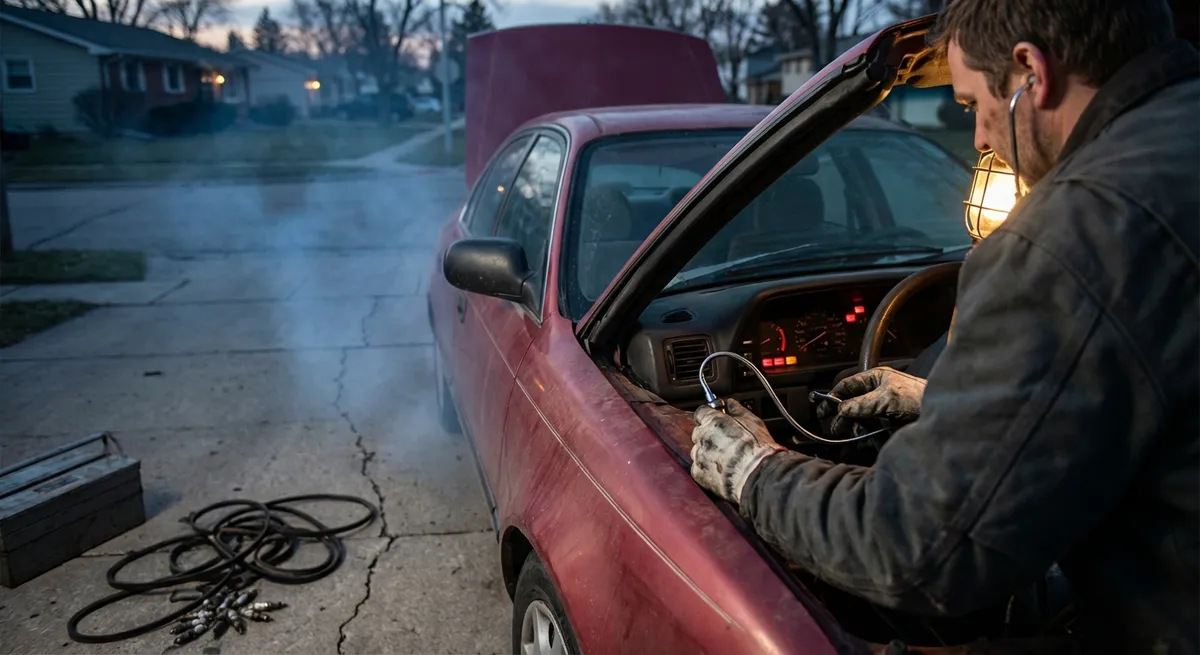
This guide walks you through how to read what your engine is telling you, how to respond, and how to prevent minor issues from turning into full-blown engine repair jobs. You’ll also find five professional-level tips and maintenance moves that serious DIYers and smart owners should apply.
How Modern Engines Fail (And Why It’s Rarely Sudden)
Modern engines are impressively durable. With proper maintenance, many will see 200,000+ miles. When they do fail early, it’s usually because small issues were ignored:
- Overheating that wasn’t handled correctly
- Running low on oil or using the wrong oil
- Driving with active misfires
- Ignoring leaks, strange noises, or warning lights
- Poor-quality or overdue maintenance (plugs, filters, coolant, etc.)
Most catastrophic failures start as a manageable problem: a slow coolant leak, a minor oil seep, a weak ignition coil. Catching these early is what separates an inexpensive fix from an engine rebuild or replacement.
A professional mindset doesn’t mean you fix everything yourself—it means you respond to what the car is telling you in a systematic, informed way.
Decoding Engine Noises: What You Can’t Afford to Ignore
Engine sound is one of your first and best diagnostic tools. You don’t need special equipment—just attention and a bit of knowledge.
Common Engine Noises and What They Often Mean
Sharp metallic knocking that gets faster with RPM
- Often called “rod knock” or bottom-end knock. - Indicates excessive clearance in the connecting rod bearings. - Usually caused by oil starvation, severely low oil, or long-term abuse. - Action: Do not keep driving. Check oil level immediately. If noise persists, tow the car and get a professional diagnosis. This is serious.
Light metallic ticking from top of engine
- Can be normal on some engines (especially when cold), but new or loud ticking may mean: - Low oil level or pressure - Worn lifters, cam followers, or valve train components - Action: - Check oil level and condition. - If level is fine and ticking is persistent, schedule an inspection. Don’t ignore a new noise that lasts more than a day or two.
Ping/“marble rattling in a can” sound under acceleration
- Common sign of detonation or pre-ignition (“knock”). - Caused by incorrect fuel, excessive carbon buildup, advanced ignition timing, or overheating. - Action: - Make sure you’re using the correct octane fuel. - If the noise continues, have it checked: prolonged knock can damage pistons and valves.
Deep rumble or growl from front of engine
- May be a failing accessory bearing (alternator, idler pulley, A/C compressor, or water pump). - Action: - Use a mechanic’s stethoscope or a long screwdriver (carefully) to listen near accessories with the engine idling. - Replace noisy pulleys or components early—if a water pump or belt idler seizes, you can lose the serpentine belt and overheat quickly.
Pro Tip #1 – Create a Noise Baseline
Once a month, with the hood open and the car safely in Park (or Neutral with parking brake on):
- Let the engine idle and listen from the front and sides.
- Briefly raise RPM to 2,000–2,500 and listen again.
- Note any new rattles, ticks, or squeals.
Act when something changes. Professionals don’t wait until it’s “really bad”—they move when the pattern shifts.
When Your Engine Smells Wrong: Burning, Sweet, and Fuel Odors
Smells can reveal issues long before you see a check engine light.
Key Odors and Their Usual Causes
Burning oil (acrid, oily smell, blue-gray exhaust smoke)
- Often from: - Leaking valve cover gasket dripping onto hot exhaust - Worn valve stem seals or piston rings - PCV (positive crankcase ventilation) system issues - Action: - Look for oil wetness around valve covers and engine block. - Monitor oil level closely; top off as needed. - Address leaks early—oil on exhaust can be a fire hazard.
Sweet, syrupy smell (coolant)
- Indicates coolant leak from: - Radiator, hoses, heater core, or water pump - Head gasket or intake manifold gasket in some designs - Action: - Never open a hot cooling system. Wait until the engine is completely cool. - Check coolant level in the reservoir, look for dried white or green/pink deposits. - Persistent sweet smell with fogged windows or damp carpet may indicate a leaking heater core—this can lead to overheating if ignored.
Strong raw fuel smell (gasoline)
- Could be: - Leaking fuel line or injector - Evaporative emission (EVAP) system leak - Action: - Treat this as urgent: fuel leaks are a fire risk. - Avoid driving if you smell strong fuel under the hood or near the rear of the car. Tow it if needed.
Electrical/burning plastic odor
- May indicate wiring issues or failing electrical components. - Action: - Shut off the vehicle if you smell this strongly. - Inspect for melted connectors or harness damage before driving further.
Pro Tip #2 – Use White Cardboard to Find Leaks
Slide a clean piece of white cardboard or thick paper under the engine overnight:
- Brown/black slippery spots – oil
- Green, pink, orange, or yellow watery spots – coolant
- Clear or slightly yellow with fuel smell – gasoline
- Clear and odorless – probably condensation from A/C
Document what you see with photos and dates—that’s exactly how pros track leak progression.
Check Engine Lights and Rough Running: When to Park, When to Drive
The dashboard is your engine’s built-in communication system. Understanding it prevents guesswork and damage.
Solid vs. Flashing Check Engine Light
- Solid Check Engine Light (CEL)
- Often emissions-related—sensor issues, mild misfires, EVAP leaks, etc.
- Usually safe to drive short-term if the car feels normal, but you should scan the code soon.
- Flashing Check Engine Light
- Indicates an active misfire severe enough to risk catalytic converter damage.
- Action:
- Reduce speed immediately, avoid hard acceleration.
- If the engine is shaking badly, park the car and have it towed.
- Driving through a flashing CEL can transform a simple coil or plug issue into a four-figure repair (damaged catalytic converters).
Rough Idle, Hesitation, or Power Loss
Common causes include:
- Failing ignition coils or worn spark plugs
- Vacuum leaks at hoses or intake gaskets
- Dirty or failing mass airflow (MAF) sensor or throttle body
- Low fuel pressure (weak pump or clogged filter)
Pro Tip #3 – Own a Basic OBD-II Scanner
A decent handheld scanner or Bluetooth OBD-II adapter is an essential engine tool, even if you don’t do your own repairs.
- Read and clear codes, view freeze-frame data (what the engine was doing when the issue appeared), and monitor live data like coolant temp and fuel trims.
- When talking to a shop, give them the codes you’ve seen and what conditions they appeared under (cold start, highway, heavy acceleration). This makes diagnosis faster and more accurate.
Oil, Coolant, and Heat: The Three Things That Kill Engines Fast
If you remember nothing else: engines die quickly when starved of oil, starved of coolant, or overheated.
Watching Your Oil Like a Pro
- Check oil level every 1,000 miles or once a month, whichever comes first.
- Look for:
- Level below the “MIN” mark – top off, and find out why it’s consuming or leaking.
- Milky or coffee-colored oil – potential coolant contamination (possible head gasket issue).
- Heavy fuel smell – possible fuel dilution from short trips or misfires.
- Avoid long high-RPM runs when oil is low or overdue for a change. Thin, old oil can’t protect bearings under heavy load.
Driving habit:
Cooling System Discipline
- Watch the temperature gauge; it should stay in its normal range once warm.
- If it suddenly climbs:
- Turn off A/C, turn heater to full hot, fan high.
- Safely pull over as soon as possible.
- Do not keep driving “just a few more miles.”
- Never remove the radiator cap when hot; you can get serious burns and cause sudden coolant loss.
Pro Tip #4 – Never Add Cold Water to a Hot Engine
If your engine overheats and you’re low on coolant:
- Let the engine cool completely before adding coolant or water.
- Adding cold liquid to a very hot engine can cause thermal shock and crack components, including the block or head.
Overheating episodes are a major cause of warped cylinder heads and blown head gaskets—often turning a moderate repair into an engine replacement.
Five Professional Engine Repair & Maintenance Tips for Everyday Owners
These are practical, high-impact habits taken straight from how good shops and experienced techs treat engines.
1. Use OEM-Grade Fluids and Filters
- Follow the oil viscosity and specification in your owner’s manual (e.g., API SN, ILSAC GF-6, Dexos, etc.).
- Avoid bargain filters with unknown brands; poor filters can cause low oil pressure or bypass dirty oil.
- For coolant, match the chemistry required by your manufacturer—mixing incompatible coolants can damage seals and reduce corrosion protection.
2. Don’t Stretch Spark Plug and Ignition Service Intervals
- Modern iridium plugs last longer, but not forever. When they wear:
- Coils work harder and can fail.
- Misfires increase, damaging catalytic converters.
- Replace plugs on schedule or a bit early if:
- You tow, drive hard, or do a lot of short-trip city driving.
- Always torque plugs properly and use anti-seize only if the manufacturer recommends it.
3. Inspect Belts and Hoses With Every Oil Change
- Look for:
- Cracks, glazing, or missing ribs on serpentine belts
- Soft, swollen, or cracked coolant hoses
- Timing belts are especially critical: if your engine is an interference design, a broken timing belt can destroy valves and pistons instantly. Replace them on-time or early, not late.
4. Keep the Air and Fuel Path Clean
- Replace the engine air filter on schedule or whenever it’s visibly dirty. Restricted airflow can reduce power and worsen fuel economy.
- Use good-quality fuel from reputable stations; poor fuel can accelerate injector and valve deposits.
- On vehicles known for intake valve carbon buildup (many direct-injection engines), consider professional cleaning at recommended intervals.
5. Warm Up Smart, Drive Smart
- Don’t rev a cold engine hard. Oil is thicker when cold and hasn’t fully circulated.
- After a cold start, drive gently for the first few minutes rather than idling for a long time; light driving brings everything to temperature more evenly.
- After heavy highway or towing use, give the engine a minute of easy driving or light idling before shutdown to stabilize temperatures—especially important on turbocharged engines.
When to DIY and When to Call a Pro
Some engine-related tasks are excellent for capable DIYers:
- Oil and filter changes
- Air filter and cabin filter replacement
- Spark plugs (on accessible engines)
- PCV valve replacement
- Visual leak inspections, belt and hose checks
However, stop and call a professional when you encounter:
- Persistent overheating or coolant loss with no obvious external leak
- Low oil pressure warnings
- Loud knocking, severe misfires, or flashing check engine lights
- Head gasket symptoms (overheating, white smoke, coolant loss, milky oil)
- Timing chain/belt noise or suspected timing failures
Professional shops have specialized tools—compression testers, leak-down testers, borescopes, factory scan tools—and access to technical service bulletins (TSBs) and manufacturer procedures. The best outcome often comes from you catching the problem early and a qualified tech solving the complex parts.
Conclusion
Engines rarely fail without warning. They knock, tick, smell, smoke, and light up the dash long before they surrender. If you treat every change in sound, smell, and gauge reading as useful data instead of background noise, you’ll:
- Catch problems before they become catastrophic
- Save significant money on repairs
- Extend the life of your engine far beyond the average
Think like a professional: pay attention, document changes, use simple diagnostic tools, and act early. Your engine will pay you back with years of reliable, quiet, uneventful miles—which is exactly what a healthy engine should deliver.
Sources
- National Highway Traffic Safety Administration (NHTSA) – Vehicle Maintenance – Official U.S. government guidance on key vehicle maintenance areas and safety considerations
- U.S. Department of Energy – Fuel Economy: Maintenance – Explains how proper engine maintenance affects efficiency, performance, and longevity
- AAA – Engine Coolant and Antifreeze Basics – Detailed overview of coolant types, overheating risks, and cooling system best practices
- SaferCar.gov – Dashboard Symbols and Indicators – Federal resource explaining warning lights, including check engine and temperature indicators
- Penn State Extension – Engine Oil: What to Know – Educational breakdown of oil types, viscosity, and why correct lubrication is critical for engine protection