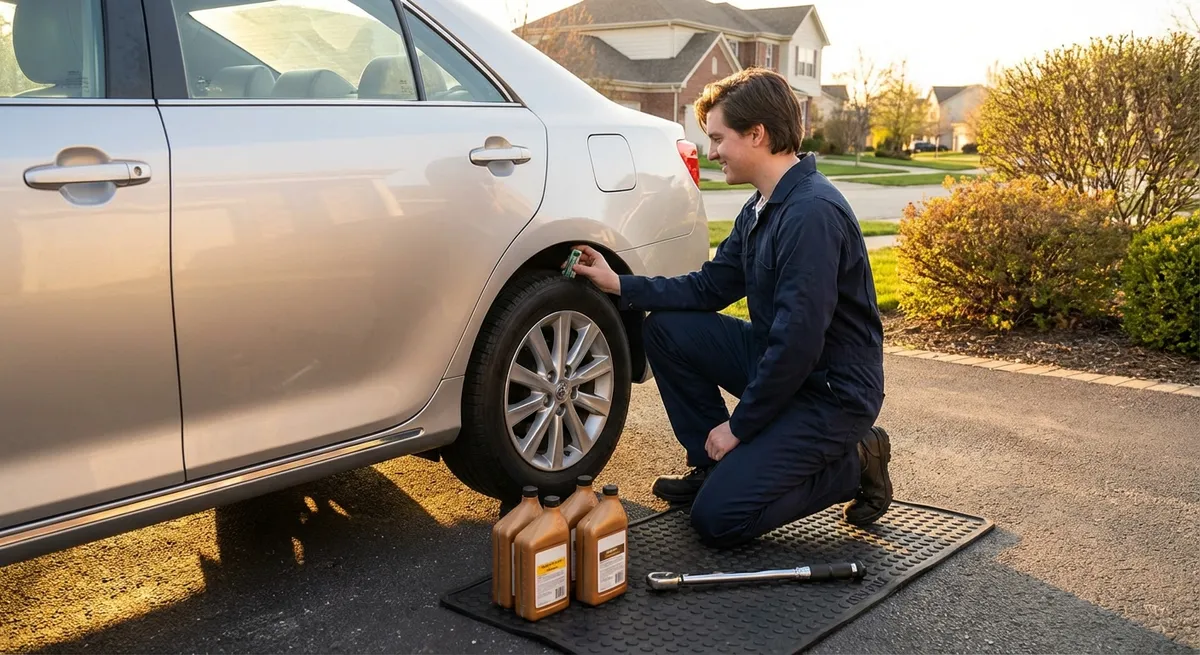
Tip 1: Treat Fluids Like Components, Not Consumables
Most drivers think of oil and coolant as “stuff the car uses up.” Pros treat every fluid as a critical component that carries clues about the health of the system.
Check and manage fluids this way:
- Engine oil:
- Check on level ground, engine off, after a few minutes of sitting.
- Oil should be between the marks on the dipstick, with no metal flakes and no milky color (which can indicate coolant contamination).
- Follow the severe service schedule in your owner’s manual if you do a lot of short trips, idling, or stop‑and‑go driving—most drivers underestimate how hard this is on oil.
- Coolant:
- Inspect only when the engine is completely cool.
- Coolant in the reservoir should be between MIN and MAX; color should be consistent (usually green, orange, pink, or blue depending on type) and free of rust or sludge.
- Never mix types unless your manual explicitly allows it—wrong coolant chemistry can attack gaskets and radiators.
- Brake fluid:
- Look through the reservoir: fluid should be clear to light amber, not dark brown.
- A dark color often means the fluid has absorbed moisture, lowering its boiling point and risking brake fade under hard stops.
- Replace on time (often every 2–3 years) even if you don’t drive many miles.
- Transmission and power steering fluid (if applicable):
- Follow manufacturer procedures—many modern automatics don’t have a simple dipstick.
- Watch for delayed engagement, shuddering, or whining as signs it’s time for service even if the fluid “looks fine.”
By inspecting fluids monthly, you catch early leaks, contamination, and overheating issues long before they turn into engine or transmission failures.
Tip 2: Maintain Your Battery and Charging System Like an Investment
Batteries rarely “just die” without warning—there are usually signs. Pros pay close attention to how the car starts and the condition of the battery and charging system.
Put these habits in place:
- Visual inspection:
- Check battery terminals every oil change. Clean any white/green powdery corrosion with a battery brush and a mix of baking soda and water, then rinse and dry.
- Make sure hold‑down brackets are tight. A loose battery can vibrate, crack internally, and fail early.
- Electrical load awareness:
- Avoid extended idling with heavy electrical loads (audio system, lights, HVAC, phone charging) in modern vehicles—this can keep the alternator near maximum output and heat it up.
- Know that frequent short trips never give the alternator enough time to fully recharge the battery, which is hard on both the battery and charging system.
- Starting behavior monitoring:
- Pay attention to crank speed. If the starter suddenly sounds slower, especially on cool mornings, test the battery before it leaves you stranded.
- A cheap digital multimeter can show resting voltage (about 12.6V for a fully charged battery) and running voltage (typically 13.7–14.7V). Anything far outside that range deserves a professional check.
- Replacement timing:
- Don’t “run it until it dies.” Many batteries last 3–5 years; if yours is over four years old, have it load‑tested annually and plan replacement before a major road trip.
Consistent battery and charging system attention prevents no‑start situations, protects sensitive electronics, and extends the life of the alternator and starter.
Tip 3: Keep Your Brakes in Shape Before They Get Noisy
When brakes start squealing or grinding, you’re already late. Technicians watch brake wear trends long before any noise appears.
Use this pro‑style approach:
- Listen and feel every drive:
- Note any new squeaks when braking lightly, pulsing in the pedal, or steering wheel shake during stops—these are early signs of pad wear or rotor issues.
- A longer brake pedal travel or a “spongy” feel can indicate air in the system or deteriorated brake hoses.
- Visual checks through the wheel:
- If your wheels allow, look through the spokes: brake pads should have clearly visible friction material (not just the metal backing plate).
- Uneven pad thickness side‑to‑side on the same axle suggests sticking calipers or guide pins that need attention.
- Brake dust pattern monitoring:
- One wheel significantly cleaner or dirtier than the others can indicate a dragging or underperforming brake on that corner.
- Chronic heavy dust on front wheels may be normal for some pad compounds, but sudden changes are worth investigating.
- Fluid and hardware service:
- Regularly flushing brake fluid (per manufacturer schedule) removes moisture that causes rust inside calipers and ABS components.
- When replacing pads/rotors, insist on proper hardware service: cleaning and lubricating slide pins, replacing worn shims and clips. Skipping this is a major cause of premature brake wear and noise.
By treating braking performance as something you monitor continuously—not just when the warning light appears—you’ll avoid warped rotors, uneven wear, and emergency‑level repairs.
Tip 4: Protect Suspension and Tires as One System
Many owners treat tires and suspension separately. Pros know they work as a unit: if one is off, the other wears out faster.
Here’s how to manage them together:
- Tire pressure discipline:
- Check pressures monthly and before long trips, using the placard inside the driver’s door—not the max pressure on the tire sidewall.
- Adjust when tires are cold. Underinflation creates heat, damages sidewalls, and kills fuel economy; overinflation reduces grip and ride quality.
- Tire inspection with purpose:
- Look for wear patterns:
- Wear on both shoulders = underinflation.
- Wear in the center = overinflation.
- One edge only = alignment or suspension issue.
- Cupping or scalloping = possible worn shocks/struts.
- Check for bulges, cuts, or exposed cords; replace immediately if found.
- Rotation and alignment strategy:
- Rotate tires on schedule (often 5,000–7,500 miles). Make it a habit to rotate with every oil change or every other oil change, depending on your interval.
- Get an alignment any time you replace tires, notice off‑center steering, or hit a major pothole or curb hard.
- Suspension health checks:
- Pay attention to clunks over bumps, excessive body roll, or “floaty” behavior at highway speeds. These are signs of worn shocks, struts, or bushings.
- Look underneath for leaking shock/strut bodies and cracked or deteriorated rubber bushings.
Attending to tires and suspension together keeps your car stable, predictable, and far less prone to the kind of uneven wear that forces early tire replacement.
Tip 5: Make Airflow and Filtration a Priority, Not an Afterthought
Airflow issues are quiet failure modes: they don’t always trigger immediate symptoms, but they slowly reduce efficiency and increase component stress. Professionals are fanatical about proper filtration.
Integrate this mindset:
- Engine air filter:
- Inspect at least annually or per the manual, more often if you drive on dirt or gravel roads.
- Hold it up to a strong light: if you can’t see light through most of the media, replace it.
- A clogged filter forces the engine to work harder for the same power and can skew air‑fuel readings.
- Cabin air filter:
- Often hidden behind the glove box or under the cowl, and often ignored.
- A dirty cabin filter restricts HVAC airflow, overworks the blower motor, and can contribute to window fogging and weak defrost performance.
- Replace on time, especially if you have allergies or drive in urban pollution.
- PCV (Positive Crankcase Ventilation) system:
- A stuck or restricted PCV valve and hoses can cause oil leaks, sludge formation, and rough running.
- Many manufacturers specify inspection or replacement intervals—don’t skip them.
- Cooling system airflow:
- Periodically check the front grille and radiator/condenser area for leaves, plastic bags, and debris.
- Gently clean the fins with low‑pressure water (never a pressure washer) from the back side if accessible. Crushed fins reduce cooling efficiency and can lead to overheating under load.
By keeping air and fluid pathways clean and unrestricted, you prevent small airflow issues from snowballing into overheating, oil consumption, or drivability problems.
Conclusion
Professional‑level maintenance isn’t about owning a lift or a full toolbox. It’s about watching the same critical points technicians check: fluids, electrical health, brakes, suspension/tires, and airflow. Build these five habits into your routine, and your car will stay closer to “shop‑ready” condition all the time—safer, more efficient, and far less likely to surprise you with an expensive failure.
Sources
- NHTSA – Vehicle Maintenance and Safety – U.S. safety agency guidance on key systems and maintenance practices
- Car Care Council – Free Car Care Guide – Industry‑backed maintenance recommendations and service intervals for consumers
- AAA – How to Inspect and Maintain Your Vehicle’s Tires – Expert advice on tire inspection, pressure, and rotation strategies
- Consumer Reports – How to Maintain Your Car – Practical overview of essential maintenance tasks and timing
- Penn State Extension – Automotive Brakes and Brake Systems – Educational resource on brake components, function, and maintenance considerations