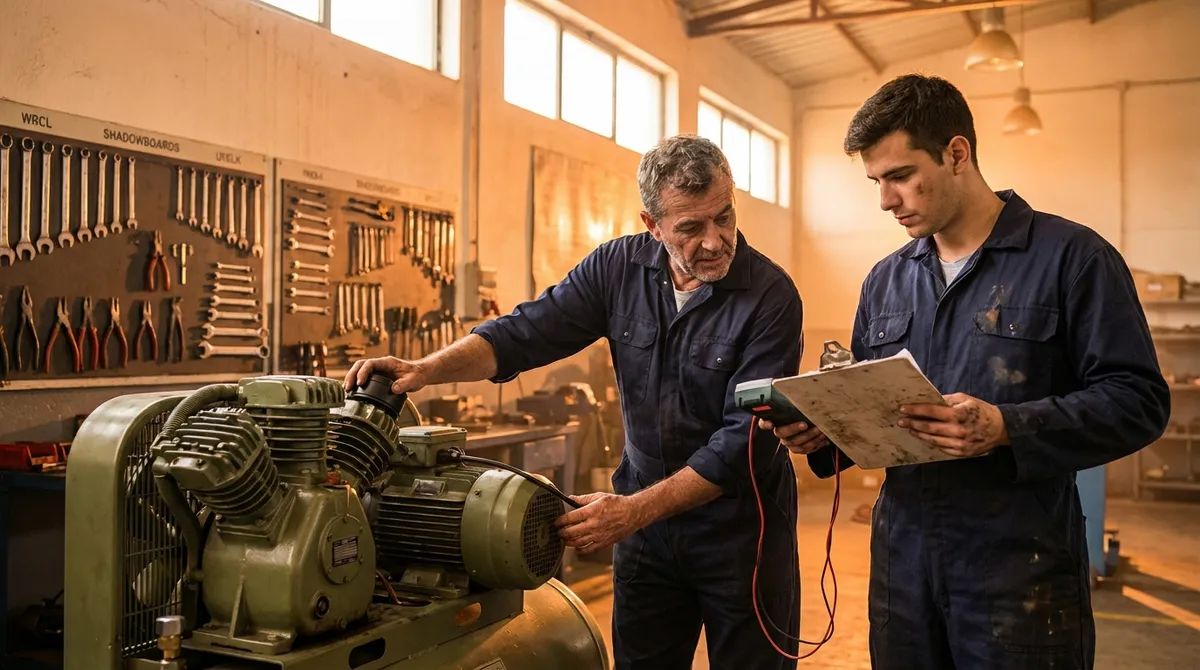
Below are five professional-grade maintenance tips, explained the way you’d hear them in a real shop: what to do, how often, and what to watch for.
1. Treat Fluids Like Wear Items, Not Lifetime Parts
Most major failures trace back to neglected fluids. In a shop, we don’t ask, “Is it still full?” We ask, “What condition is it in?”
Engine Oil
- Don’t rely only on mileage; consider your driving pattern. Short trips, towing, extreme temps, and idling justify shorter intervals.
- Use the viscosity and spec listed in your owner’s manual (or on the under-hood label). “Thicker is better” is a myth on modern engines.
- Check oil level monthly, on level ground, with the engine off for a few minutes.
- Dark oil alone isn’t a panic sign; gritty oil, metallic sheen, or heavy fuel smell are.
Coolant (Antifreeze)
- Coolant isn’t just colored water; it carries corrosion inhibitors and lubricates the water pump. Those additives wear out.
- Inspect coolant when the engine is completely cold—never remove a hot radiator cap.
- Look for discoloration (brown/rusty), debris, or “sludge” at the filler neck or reservoir. Any of those are a sign it’s overdue for a system flush and inspection.
Transmission Fluid
- If your vehicle has a dipstick, check with the engine warm, in Park, following the manual’s procedure.
- Healthy fluid is usually red or amber and transparent. Burnt smell or dark brown/black color needs attention.
- “Lifetime” fluid mostly means “lifetime of the warranty.” Professional shops still recommend periodic service, especially for towing or heavy-city use.
Practical takeaway: Don’t just top off. Inspect condition, follow the severe service schedule if your driving is anything but gentle highway, and log every fluid service with date and mileage.
2. Use Patterns, Not Panic, to Track Wear on Tires and Brakes
Tires and brakes are where your car meets the road—and where a lot of hidden problems first show up.
Tires
- Check pressure at least once a month and before road trips, with a quality digital or dial gauge. Always set pressures to the door-jamb label, not the sidewall number.
- Uneven wear is diagnostic:
- Worn edges, good center: typically underinflation.
- Worn center, good edges: overinflation.
- One edge worn more: potential alignment or suspension issue.
- Cupped or scalloped tread: worn shocks/struts or unbalanced wheels.
- Rotate tires on a consistent pattern (often every 5,000–7,500 miles, or with every oil change). Keep a record so all four tires age evenly.
Brakes
- Listen and feel:
- Squealing at low speeds can be wear indicators contacting the rotor—time to inspect.
- Pulsation in the pedal or steering wheel during braking suggests warped rotors or uneven pad material transfer.
- Pulling to one side under braking often points to a sticking caliper or uneven pad wear.
- Visually check pad thickness through the wheel spokes when possible; if material is thinner than 3–4 mm, plan on replacement.
Practical takeaway: Don’t just replace parts when they’re “bad.” Use how they wore out to find the underlying cause—alignment, suspension, or driving habits—so the new parts last longer.
3. Make the Front of the Engine a Scheduled Inspection Zone
The front of the engine—where belts, pulleys, and tensioners live—is where small failures quickly become expensive ones.
Drive Belts (Serpentine and Accessory Belts)
- Inspect for:
- Cracks, missing chunks, or fraying on the edges.
- Glazing (shiny, glassy look) which can cause squealing and slippage.
- Rubber dust around pulleys—often a sign of misalignment or a failing tensioner.
- Modern belts can look “okay” but still be hardened or stretched. If you’re in the range recommended by the manual, replace on schedule instead of waiting for noise.
Tensioners and Pulleys
- With the engine off, gently twist or flex the belt and spin accessible pulleys by hand (being careful around hot components).
- A good pulley spins smoothly and quietly without wobble; any roughness, noise, or play means it’s time to replace.
- A weak belt tensioner can cause intermittent issues: dash lights flickering, alternator undercharging, or power steering that cuts out under load.
Timing Belt / Timing Chain Area
- If your engine uses a timing belt, treating its replacement interval as optional is how valves get bent. Know the mileage and time limit (often 60k–105k miles or 6–10 years).
- For timing chains: they’re more durable but not immortal. Rattles on cold start, metal in the oil, or cam/crank correlation codes are red flags.
Practical takeaway: Every oil change is an opportunity to visually and manually inspect the belt drive system. Replacing a tensioner or belt on your terms is far cheaper than cleaning up after a roadside failure.
4. Keep Airflow Unrestricted: Filters and the Hidden Intake System
Engines are air pumps. Restrict the air, and you lose power, efficiency, and long-term reliability.
Engine Air Filter
- Inspect at least twice a year, more often in dusty or rural environments.
- Hold the filter up to a strong light—if you can’t see light through much of the media, it’s time to replace.
- Avoid over-oiling aftermarket oiled filters; excess oil can contaminate the mass airflow (MAF) sensor and create drivability problems.
Cabin Air Filter
- This isn’t just comfort; a clogged cabin filter can restrict HVAC airflow and strain the blower motor.
- If you have weak airflow at all settings but normal fan noise, the filter is a prime suspect.
- Replace roughly every 1–2 years, more often in urban or high-pollen regions.
Intake Tract and Throttle Body
- Over time, crankcase vapors and EGR deposits can build up on the throttle body and intake, causing rough idle or throttle lag.
- With the intake boot removed and engine off, visually inspect for heavy carbon or oily sludge around the throttle plate.
- Use cleaner specified for throttle bodies and follow product instructions; avoid soaking sensitive sensors.
Practical takeaway: Clean, unrestricted airflow is low-cost insurance. Filters and basic intake cleaning keep sensors reading accurately and reduce long-term carbon buildup.
5. Electrical Health: Battery, Grounds, and “Phantom Problems”
Modern vehicles are dependent on stable electrical power. A weak battery or poor grounds can mimic major failures and trigger strange, intermittent issues.
Battery
- Check battery age. Anything over 4–5 years is living on borrowed time, especially in hot climates.
- Inspect terminals for corrosion (white/green crust), loose clamps, or damaged cables. Clean with a proper battery cleaning brush and a mix of baking soda and water if needed, then dry and protect with dielectric grease or terminal protectant.
- Have the battery load-tested annually, especially before winter or a big trip. Voltage alone doesn’t tell the full story of its health.
Charging System
- Pay attention to headlight brightness at idle versus higher RPMs—a big difference can point to alternator or belt issues.
- If your dash has a voltage display, get familiar with its normal range. Sudden deviations are worth checking before you’re stuck.
Grounds and Connections
- Poor grounds can cause:
- Random sensor codes
- Flickering lights
- Strange transmission behavior
- Intermittent stalling
- Inspect visible ground straps between engine, body, and frame for corrosion or looseness.
- On older vehicles, cleaning and tightening ground connections is a cheap, high-impact maintenance step.
Practical takeaway: Before chasing complex electrical faults, establish a baseline: strong battery, solid charging voltage, clean connections. This is exactly how pro technicians eliminate variables before diving deep.
Conclusion
Maintenance isn’t about doing everything; it’s about doing the right things consistently. When you:
- Treat fluids as wear items,
- Read wear patterns on tires and brakes,
- Inspect the front of the engine on a schedule,
- Keep airflow and filters in check, and
- Maintain a strong, clean electrical system,
you’re using the same mindset professionals use to keep vehicles reliable and predictable.
Build a simple log (paper or digital) with dates, mileage, and what you inspected or replaced. Over time, that record becomes as valuable as the parts themselves—and it’s the difference between “reacting to problems” and actually being in control of your car’s health.
Sources
- [NHTSA – Vehicle Maintenance](https://www.nhtsa.gov/road-safety/vehicle-maintenance) - U.S. government guidance on basic maintenance and safety-critical systems
- [Car Care Council – Car Care Resources](https://www.carcare.org/car-care-resource/car-care-guide/) - Industry-supported maintenance recommendations and intervals for common services
- [AAA – How Often Should I Change My Oil?](https://newsroom.aaa.com/2016/06/oil-change-advice/) - Explains oil change intervals and severe vs. normal driving conditions
- [Bridgestone – Tire Tread Wear and Maintenance](https://www.bridgestonetire.com/learn/maintenance/tire-tread-depth/) - Professional advice on reading tire wear and understanding tread depth
- [Consumer Reports – Car Battery Buying & Maintenance Guide](https://www.consumerreports.org/cars/car-batteries/buying-guide/) - Independent overview of battery lifespan, testing, and replacement considerations