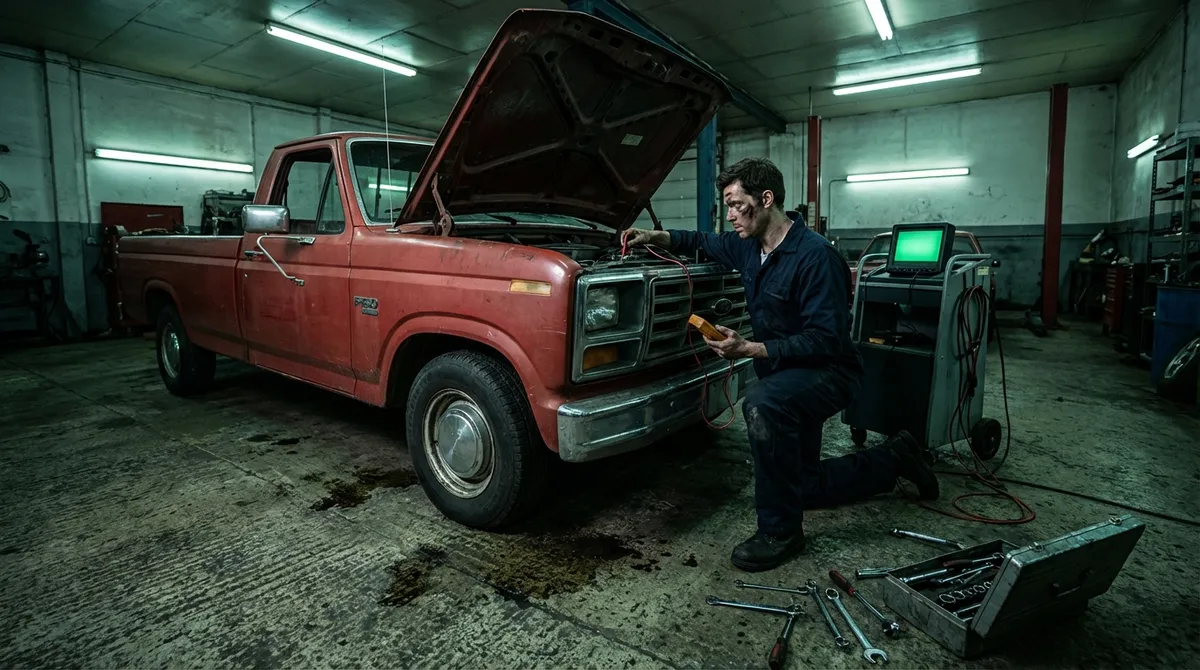
This guide walks you through a practical, shop-style method for diagnosing and repairing persistent engine issues, plus five professional tips and maintenance practices that keep those problems from coming back.
Build a Baseline: What Your Engine Is Actually Doing
Before replacing anything, you need a clear baseline. In professional diagnostics, this means two things: what the driver feels and what the data shows.
Start with what you can feel and observe:
- How does the engine start—instantly, slowly, or only on the second try?
- Does the idle feel smooth, slightly rough, or like it’s “hunting” up and down?
- When you accelerate, is power linear, or does it hesitate, surge, or misfire?
- Do problems get better or worse with engine temperature (cold vs. fully warm)?
- Do symptoms change with fuel level, A/C on vs. off, or at certain speeds?
Then layer in what the engine computer is seeing:
- Use an OBD-II scan tool (not just a cheap code reader if you can avoid it)
- Record any stored and pending codes, not just “check engine” light codes
- Look at freeze frame data—what RPM, load, temp, and speed were present when the fault set
- Check live data: coolant temp, fuel trims, O2 sensor voltages, MAF/MAP readings, misfire counters
Your goal: write down specific behaviors. “Hesitates on light throttle at 30–40 mph when warm” is actionable. “Runs weird sometimes” is not.
This is exactly how a pro tech starts: define the problem in detail before touching a wrench.
Verify the Basics: Air, Fuel, Spark, and Compression
Every four-stroke gasoline engine needs the same fundamentals: the right amount of air, the right amount of fuel, a strong spark at the right time, and sufficient compression. If you skip verifying these basics, you risk hunting ghosts.
Air
- Air filter: Remove and inspect. If you can’t see light through it, replace it.
- Intake leaks: With the engine idling, gently spray brake cleaner or carb cleaner around intake boots, throttle body base, and vacuum connections. A sudden RPM change suggests a vacuum leak. Use caution—flammable and hard on paint; keep away from hot exhaust.
- Mass Air Flow (MAF): Compare live MAF grams/second at idle and higher RPM to typical values (many OEM service manuals or forums list expected ranges). Very low or erratic values point to MAF or intake leak issues.
Fuel
- Fuel pressure: Use a gauge on the test port (if equipped); compare to factory spec. Low pressure can indicate a weak pump, clogged filter, or regulator problem.
- Injector balance: An advanced step, but misfires confined to one cylinder often point to a clogged or faulty injector. Many scanners show individual cylinder misfire counts.
- Fuel quality: If problems started right after a fill-up, consider poor fuel or water contamination. In severe cases, draining the tank and replacing the fuel filter is the cleanest solution.
Spark
- Spark plugs: Pull and inspect at least one from each bank. Look for oil fouling, heavy deposits, cracked porcelain, or abnormal wear. Always compare to OEM plug type and gap spec.
- Ignition coils/wires: Swap coils or plug wires between cylinders to see if a misfire “follows” the part. If cylinder 3 misfire follows a coil from cylinder 2, the coil is suspect.
- Grounds and battery: Poor grounds or low voltage can create weak spark and random misfires. Check battery terminals, engine grounds, and charging voltage.
Compression and Mechanical Condition
- Compression test: All cylinders should be within about 10–15% of each other. One low cylinder can cause roughness and misfire at idle.
- Leak-down test: If compression is low, a leak-down test tells you where air is escaping—past valves, rings, or head gasket.
- Timing components: On higher-mileage engines, worn timing chains or belts can cause poor performance even before they fail completely. Listen for chain rattle on startup and compare cam/crank correlation data if your scan tool supports it.
Verifying these fundamentals reduces guesswork and often reveals that the problem is simpler than it looked.
Five Professional Repair and Maintenance Tips That Actually Prevent Repeat Problems
1. Replace in Systems, Not in Isolation
Pros don’t just swap the obviously failed part; they think in terms of systems.
Examples:
- Ignition: If one old ignition coil failed and the others are the same age and known to be problematic for your engine, replacing them as a set can prevent near-future comebacks.
- Cooling: When a water pump fails on a high-mileage timing belt engine, a professional job usually includes a new belt, tensioner, and often idlers and seals—because those have to be disturbed anyway.
- PCV and crankcase ventilation: A clogged PCV valve can cause oil leaks, rough idle, and sludge. When servicing, inspect and clean or replace the entire PCV path: valve, hoses, and orifices.
This approach costs a bit more now but saves you from re-opening the same area of the engine in a few months.
2. Use OEM or Proven-Quality Parts Where It Matters
Engine systems are much less tolerant of bargain parts than cosmetic or suspension items.
Prioritize OEM or high-quality aftermarket parts for:
- Sensors: MAF, crankshaft and camshaft position sensors, O2 sensors, coolant temp sensors. Cheap units are notorious for being out-of-spec right out of the box.
- Ignition components: Coils and plugs should match OEM spec in brand, material, and heat range unless you have a known, tested upgrade.
- Gaskets and seals: A cheap valve cover gasket or intake manifold gasket that leaks will undo hours of labor.
Where you can safely save a bit:
- Engine air filters, cabin air filters, and some hoses, as long as they meet OEM spec and are from a known brand.
The pro rule: never install a part you don’t trust enough to warranty.
3. Control Heat: Keep the Cooling and Lubrication Systems Healthy
Excess heat is one of the main killers of modern engines. You reduce repair risk dramatically by focusing on temperature and lubrication.
Key tasks:
- Coolant flush on schedule: Old coolant loses corrosion inhibitors and can attack aluminum components, clog radiators, and damage water pumps and thermostats. Follow the interval in your owner’s manual.
- Thermostat and radiator cap: If you’ve had overheating, don’t ignore these. A stuck thermostat or a weak cap (that can’t hold pressure) can keep the engine running too hot.
- Oil quality and level: Modern engines with small oil passages and variable valve timing (VVT) are very sensitive to sludge and low oil levels. Check oil monthly, change according to time and mileage, and use the viscosity and quality spec (e.g., API, ILSAC, Dexos) your manufacturer calls for.
- Cooling fan operation: Fans that don’t engage when hot (or stay on constantly) point to relay, temp sensor, or control issues. Verify fan operation during warm-up and with A/C on.
Pro mindset: an engine that runs at the right temperature with clean oil is dramatically less likely to develop costly mechanical failures.
4. Confirm the Fix With Data, Not Just Feel
A professional job doesn’t end when the engine “seems fine.” It ends when the fix is verified.
Post-repair, do the following:
- Clear codes, then retest under similar conditions to those that triggered the issue.
- Re-check fuel trims: After fixing vacuum leaks or fuel issues, verify that long-term trim settles close to 0% (generally within ±10% is acceptable for many engines).
- Monitor misfire counters on a short test drive; they should remain at or near zero.
- Listen and feel: Idle quality, throttle response, and shift behavior (on automatics) should be consistent and predictable.
If your engine has had long-term problems like heavy misfires or frequent overheating, keep an eye on:
- Oil color and level (check for rapid darkening or coolant contamination)
- Coolant level and signs of combustion gases in the coolant (bubbling, overflow)
- Any new codes that appear after a few drive cycles
This “verify by data” step is how professionals avoid comebacks—and how you can confidently say a repair is truly finished.
5. Adopt a “Soft Start” and “Clean Run” Habit
The way you operate the engine affects how often it needs repair, especially on modern, tightly-tuned designs.
Practical habits:
- Warm-up the right way: Avoid extended idling. Start the engine, give it 20–60 seconds to stabilize, then drive gently until coolant and oil are up to temperature. Light load warms everything more evenly than idling for 10 minutes.
- Avoid high RPM when cold: Thick, cold oil doesn’t protect as well at high revs. Keep throttle and RPM modest in the first few miles.
- Keep the intake path clean: Regularly inspect for cracked boots and loose clamps. Unmetered air (intake leaks) forces the computer to chase fuel trims and can stress catalytic converters with lean misfires.
- Use good fuel and avoid extended low-fuel driving: Running near empty constantly can overheat in-tank pumps and stir up debris at the bottom of the tank, clogging filters.
These habits don’t just make the engine last longer—they also make diagnostics cleaner because you’re not dealing with damage from chronic abuse.
When to Stop DIY and Call a Professional
Even with a solid method, some engine problems cross the line from garage-viable to shop-only.
Strong signs you should bring in a pro:
- You’re seeing complex trouble codes involving multiple systems (e.g., cam/crank correlation, advanced fuel trim faults, CAN communication errors)
- You suspect internal engine damage: metal in oil, persistent low compression, severe knocking, or coolant in the cylinders
- The repair requires special tools (e.g., cam timing fixtures, high-end scan functions, oscilloscope) or involves major disassembly like timing chains on interference engines
- You’ve already replaced several parts without a clear improvement, and you’re now guessing
A professional engine specialist has three advantages: factory-level service information, specialized tools, and experience with your engine’s common failure patterns. Using them at the right time can save you from expensive misdiagnosis.
Conclusion
Approaching engine repair like a professional means abandoning random part swapping and adopting a disciplined system: define the symptom clearly, verify fundamentals (air, fuel, spark, compression), repair in systems instead of isolation, and confirm the fix with data.
Combine that with high-quality parts, strict control of heat and lubrication, and smart driving habits, and your engine will not only run better now—it will be far less likely to demand major repairs later. Whether you’re tackling issues in your own driveway or deciding what to hand off to a shop, this method puts you in control instead of at the mercy of warning lights and vague “it’s probably this” guesses.
Sources
- [U.S. Department of Energy – Engine and Vehicle Maintenance](https://www.energy.gov/energysaver/maintaining-your-vehicle) – Covers how proper maintenance improves reliability, efficiency, and longevity.
- [AAA – How to Diagnose a Check Engine Light](https://exchange.aaa.com/automotive/automotive-testing/diagnose-check-engine-light/) – Explains scan tools, trouble codes, and why systematic diagnosis matters.
- [SAE International – Engine Lubrication Basics](https://www.sae.org/binaries/content/assets/cm/content/topics/sae_j300_2015_0824.pdf) – Technical overview of engine oil classifications and why correct oil choice is critical.
- [Toyota Service Information – Engine Cooling Systems](https://techinfo.toyota.com) – OEM-level detail on how modern cooling systems are designed and serviced (registration required).
- [Penn State Extension – Engine Cooling System Maintenance](https://extension.psu.edu/engine-cooling-system-maintenance) – Educational guidance on coolant, overheating causes, and preventive practices.