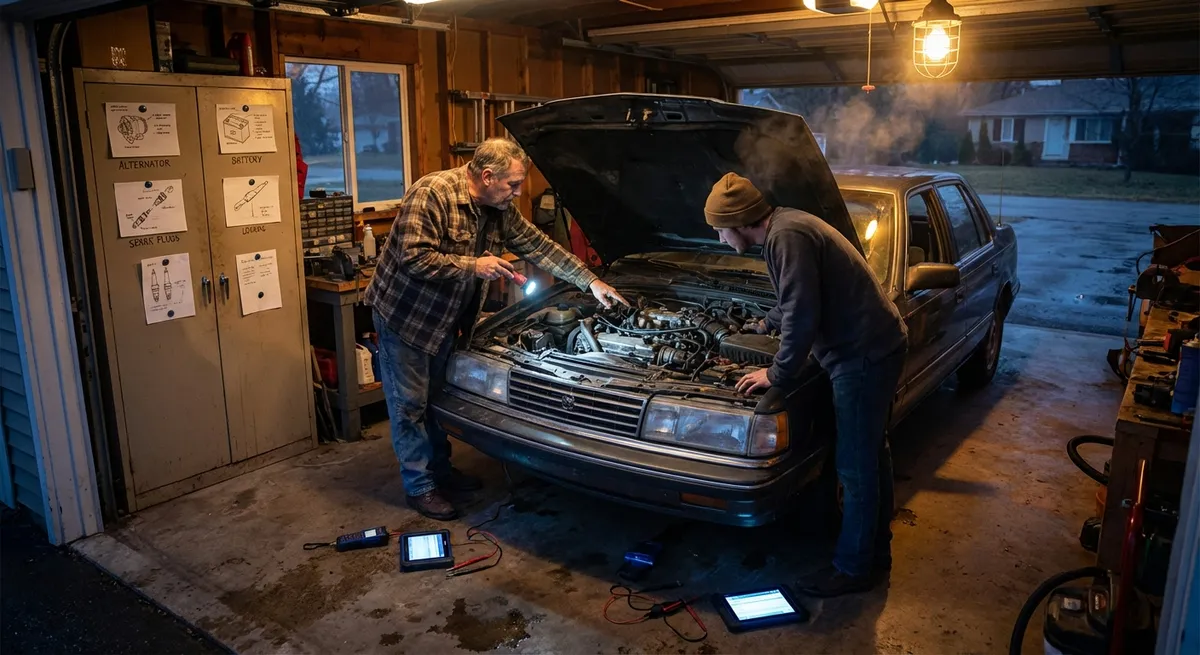
This guide breaks down practical engine repair wisdom, five pro-level tips, and maintenance habits that keep your powerplant healthy, reliable, and far away from catastrophic failure.
How Engines Really Fail (And Why It’s Seldom “Out of Nowhere”)
Catastrophic engine failures almost never happen without warning. They’re usually the final chapter in a long story of ignored symptoms, skipped service, or small problems that snowball.
Most major engine damage traces back to one of four root causes: loss of lubrication, overheating, detonation/pre‑ignition (improper combustion), or contamination (coolant, dirt, or fuel dilution in the oil). Once you understand these, every noise, vibration, or dash light becomes a clue instead of a mystery.
Loss of lubrication—running low on oil, using the wrong viscosity, or ignoring sludge buildup—scuffs bearings and scores cylinder walls. Overheating can warp cylinder heads, blow head gaskets, and crack blocks. Poor combustion from bad fuel, carbon buildup, or timing issues hammers pistons and valves. Contamination, such as coolant leaking into oil, quietly destroys bearings from the inside out.
When you think in terms of these failure modes, “random” breakdowns start to make sense. That’s the mindset professional techs use during diagnosis: trace every symptom back to one of those core problems, then verify with tests instead of guessing and throwing parts at the car.
Professional Tip #1: Treat Oil Like a Wear Item, Not an Afterthought
Engine oil isn’t just lubrication—it’s also a coolant, a hydraulic fluid for variable valve timing, and a cleaning agent that suspends contaminants for the filter to catch. When you neglect it, every internal surface pays the price.
Start by using the exact oil grade and specification listed in your owner’s manual or on the under-hood label—not just “5W‑30” but also the required standard (for example, API SP or a specific OEM spec like GM dexos, VW 508, etc.). Modern engines are designed around very specific oil flow and additive packages; improvising with “whatever’s on sale” can lead to noisy lifters, timing chain stretch, and turbocharger failure.
Don’t treat mileage alone as the only change interval. Severe service—short trips, lots of idling, extreme temperatures, towing, or frequent stop‑and‑go driving—justifies shorter intervals. If your manual gives separate “normal” and “severe” schedules, assume you’re severe unless you do mostly long, steady highway drives.
For engines prone to sludge (a quick search for your make/model plus “sludge issue” can be eye‑opening), keep intervals conservative and use a high-quality oil filter from a reputable brand. If you’re buying used, consider an early oil change and inspect the drained oil for metal flake, strong fuel smell, or chocolate-milk coloration (which suggests coolant contamination).
A simple habit that pays off: check oil level on a fully warmed engine, parked on level ground, at least once a month and before long trips. Catching a low‑oil condition early can literally save the engine.
Professional Tip #2: Cooling System Discipline Prevents Big-Ticket Repairs
Overheating is one of the fastest ways to turn a healthy engine into a boat anchor. A single severe overheat can warp cylinder heads, crush head gaskets, and start internal leaks that show up months later as “mysterious” coolant loss or milky oil.
Start by respecting the temperature gauge and warning lights. If the temp needle climbs into the red or a red temperature icon appears, pull over safely and shut the engine off immediately. Do not continue driving “just a few more miles”—those minutes are when head gaskets fail.
Under the hood, inspect the cooling system at least twice a year. Look for white or pink crust around hose connections, the radiator, and the water pump area, which indicates dried coolant from a slow leak. Squeeze the upper radiator hose (when the engine is cold); it should be firm but not rock‑hard or mushy. Brittle, cracked hoses are overdue for replacement.
Coolant isn’t just colored water—it contains corrosion inhibitors and lubricants for the water pump. Over time, those additives break down. Follow the manufacturer’s change interval and use the correct formula and color. Mixing incompatible coolants can cause gel or sludge that blocks passages and overheats the engine.
If you ever see the coolant reservoir empty, don’t just top it up and forget it. A system that’s losing coolant has a leak somewhere, even if you don’t see drips. Pressure testing the cooling system and checking for combustion gases in the coolant (common shop tests) are far cheaper than waiting for a head gasket failure.
Professional Tip #3: Listen to Idle Quality—It’s Your Engine’s Health Meter
Mechanics pay very close attention to idle quality: how smooth, stable, and quiet the engine runs when you’re not touching the throttle. A rough, surging, or hunting idle is often the earliest sign of deeper problems.
If your engine idles unevenly, shudders at stoplights, or occasionally stalls, focus on the systems controlling air, fuel, and spark. Dirty throttle bodies, carboned‑up intake valves (especially on direct‑injection engines), clogged fuel injectors, vacuum leaks, and weak ignition coils all show up first at idle before they become obvious at speed.
You don’t need a full diagnostic suite to start narrowing it down. Pay attention to patterns:
- Rougher idle when the A/C is on can indicate a weak idle control strategy or dirty throttle plate.
- Misfires that are worse in rain or high humidity point toward ignition issues—cracked coil packs, old plug wires, or moisture tracking on plug insulators.
- Idle that improves slightly with a small increase in RPM can hint at marginal fuel delivery or airflow restrictions.
Maintenance here is preventive more than reactive. Stick to recommended spark plug replacement intervals and use the exact plug type specified—engines designed for iridium plugs don’t like cheap copper substitutes. Use top-tier fuel and consider periodic fuel system cleaners approved by your manufacturer, especially if you own a direct‑injection engine.
When rough idle appears suddenly, don’t ignore it. A quick scan for stored misfire codes, even if the check engine light isn’t on solid, can point you toward the right cylinder or system before it damages catalytic converters or causes long‑term wear.
Professional Tip #4: Timing Components Are Not Optional—They’re Critical
Timing belts and chains keep the pistons and valves synchronized. When they fail, valves can collide with pistons, bending or breaking both and often totaling the engine. Many drivers treat timing components as “something the car will tell me about when it breaks”; professionals treat them like a mandatory replacement schedule.
If your engine uses a timing belt, there will be a specific mileage and/or time interval in the manual—often 60,000 to 105,000 miles or around 7–10 years. That is not a suggestion. Replace the belt on schedule, along with related components: tensioner, idler pulleys, and usually the water pump if it’s driven by the same belt. Labor is the big cost; doing the complete job once is cheaper than going back in twice.
Timing chains are marketed as “lifetime” components, but in reality they’re only as good as your oil quality and change habits. Dirty or low oil starves chain tensioners and guides, causing slack and noise. Rattling on cold starts, a check engine light for cam/crank correlation, or metal in the oil can all indicate timing chain trouble.
If you buy a used vehicle with no proof of timing belt replacement and it’s anywhere near the recommended mileage, budget to do it preemptively. This isn’t upsell—this is risk management. A failed belt at highway speed usually means a full engine rebuild or replacement.
For DIY‑minded owners: timing jobs are not beginner projects. They often require specialty tools, locking fixtures, and precision. An incorrectly timed engine can run poorly or not at all, and in interference designs, even a wrong attempt at starting can cause internal damage. When in doubt, pay a reputable shop.
Professional Tip #5: Diagnose Before Replacing—Think Like a Technician
Professionals don’t start with parts; they start with data. That mindset is why they can solve problems efficiently while many DIYers and undertrained shops throw expensive components at a symptom.
Whenever the check engine light comes on, your first step should be to retrieve the code with a scan tool—either a basic handheld unit or an OBD‑II adapter paired with a phone app. The code is not a verdict; it’s a direction. For example, a P0302 (cylinder 2 misfire) doesn’t say “replace coil,” it says “cylinder 2 isn’t burning correctly—investigate.”
Use simple tests first: visual inspection for broken connectors or damaged wiring, checking for vacuum leaks with a careful spray of carb cleaner or soapy water around suspected areas (on a cold engine, away from hot exhaust), or swapping suspect components between cylinders (such as ignition coils) to see if the problem follows. These low-cost steps mimic what pros do before they recommend $400 worth of parts.
Fuel‑related issues—weak pumps, clogged filters, failing pressure regulators—often masquerade as ignition or sensor problems. When an engine runs fine at idle but stumbles badly under load, fuel delivery is a prime suspect. If you’re not equipped to test fuel pressure safely, this is a good point to involve a trusted shop rather than guessing.
Above all, resist the urge to clear codes repeatedly without fixing the root cause. Clearing codes resets fuel trims and adaptive strategies that can actually help with diagnosis. If you must clear them, record freeze‑frame data (engine load, RPM, coolant temp, speed when the fault occurred) first; that snapshot is valuable information for anyone working on the car.
Maintenance Habits That Quietly Prevent Engine Repairs
Beyond individual tips, your day‑to‑day habits are what determine whether your engine ages gracefully or dies young. A few practical routines go a long way.
Allow a short warm‑up period before heavy acceleration, especially in cold weather. Modern engines don’t need long idling, but giving them 30–60 seconds for oil pressure and stable idle before you drive normally is smart. Avoid full‑throttle runs or high RPMs until coolant and oil are up to operating temperature; this is when clearances are tightest and wear is highest.
Stay away from chronic short trips whenever possible. Repeated 5–10 minute drives never fully heat‑soak the oil, allowing fuel and moisture to accumulate and form sludge. If your life demands a lot of short hops, consider a monthly longer drive (20–30 minutes at highway speeds) to dry things out.
Keep the air intake and filtration system healthy. A clogged air filter or leaking duct can cause lean conditions or allow abrasive dust into cylinders. Inspect the air filter at least annually and sooner if you drive in dusty conditions. Make sure the airbox is properly sealed after any service—an improperly clipped box can bypass filtration entirely.
Finally, document everything: oil changes, coolant flushes, timing belt service, even minor repairs. This log not only protects your warranty but also helps any future mechanic quickly understand your engine’s history. For you, it’s an easy way to avoid missing critical intervals; for a buyer, it’s proof your engine has been cared for, which can increase resale value.
Conclusion
Engines rarely “just die”—they fail when lubrication, temperature control, combustion, or basic maintenance are ignored. When you treat oil as a critical component, respect the cooling system, pay attention to idle quality, stay on top of timing components, and diagnose with a technician’s mindset, you dramatically lower your risk of a major engine repair bill.
You don’t have to become a master mechanic. You just need to understand what truly harms an engine and build a few smart habits around it. Do that, and your car’s most expensive component will likely outlast the rest of the vehicle.
Sources
- U.S. Department of Energy – Fuel Economy: Proper Vehicle Maintenance – Explains how oil changes, engine tuning, and maintenance affect longevity and efficiency
- AAA – How to Prevent Engine Overheating – Practical guidance on cooling system care and overheating prevention
- National Institute for Automotive Service Excellence (ASE) – Car Care Tips – Professional recommendations on engine and vehicle maintenance practices
- Edmunds – Timing Belt Replacement Interval Guide – Detailed explanation of timing belt intervals, interference engines, and why timely replacement matters
- Mobil – Engine Oil Basics – Overview of oil types, viscosity, and why following manufacturer specifications is critical for engine health